The classroom note
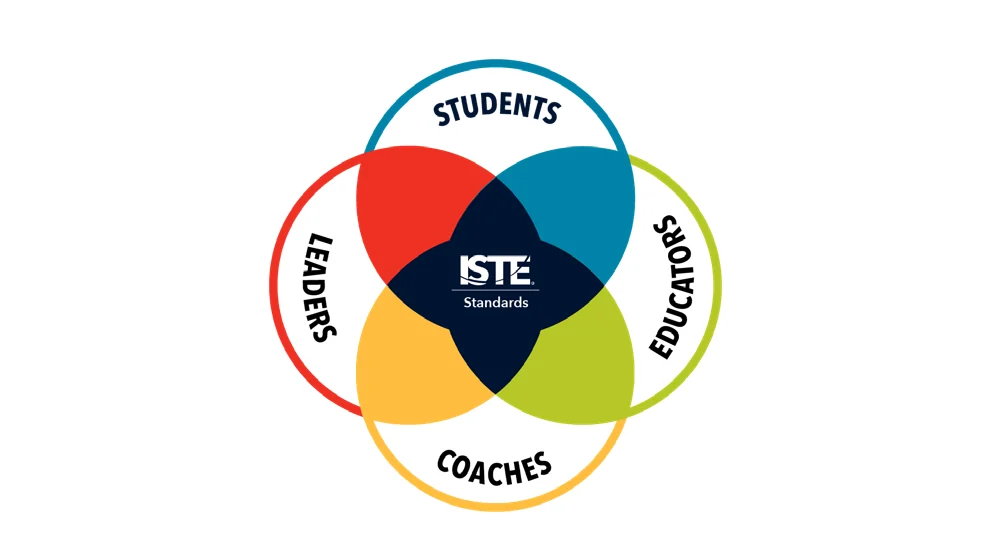
A teacher searching for an official AI standard to anchor a lesson plan will find that ISTE's standards page, a reference point many US schools already use for digital-age skills, now redirects toward iste-ascd.org: ISTE merged with the curriculum group ASCD, and the combined organisation, as retrieved on 16 September 2026, describes itself as the largest provider of AI professional development. The standards page itself, covering frameworks for students, educators, leaders, coaches and now faculty, states these have been updated to reflect 'the latest research-based best practices' but names no distinct, freestanding AI standard; AI competencies sit inside a framework that predates generative AI by two decades.
What the evidence says
The clearest AI-specific artefact is the Profile of an AI-Ready Graduate, described on the organisation's AI page as defining competencies for K-12 students to 'think critically, create responsibly, and solve problems alongside AI.' As a source, this is a professional body's own framework document, not an evaluated intervention: there is no reported study of schools that adopted the profile against schools that did not, and no measured effect on outcomes. The same page lists paid offerings, an 'AI Deep Dive for Educators' course and a deeper follow-on course, alongside a free set of downloadable lessons in English, Spanish and Arabic, without stating course fees or completion rates.
The implementation question
The practical mechanism for a district is adoption, not enforcement: ISTE+ASCD standards are voluntary, and the standards page states schools use them by folding them into 'local, districtwide or statewide expectations' or curriculum mapping, meaning any AI content only reaches a classroom if a district separately chooses to buy the courses or write the profile into local policy. The cost question is real and unanswered by the source: a merged nonprofit describing itself as the largest AI-training provider also sells the courses it recommends, an overlap common to professional associations but one a procurement officer should notice before treating the standards as free, neutral guidance.
What holds and what fails
What holds is that a graduate profile gives a district vocabulary for AI competencies it might otherwise build from scratch, and a long-established standards body carries more institutional weight than a new entrant. What fails, editorially, is any assumption that owning the standard means a school has changed practice: the standards page is explicit that adoption depends on local integration the organisation does not control or verify, and no independent evaluation of the AI-ready graduate profile's effect on students is cited on either page consulted here.
- Has our district formally adopted the Profile of an AI-Ready Graduate, or only referenced it informally?
- Are the paid AI courses required for staff, and if so, who is paying the fee?
- Where in our curriculum mapping does an AI competency actually appear, by name, rather than by inference?
A merged standards body publishing a graduate profile is a starting vocabulary, not a verified outcome, and the two should not be described as the same thing.
Sources & reading trail
Lists ISTE's standards frameworks and states they are periodically updated, with no distinct named AI standard.
Source published: Not established · Retrieved: 16 September 2026
Names the Profile of an AI-Ready Graduate and describes paid and free AI courses and resources.
Source published: Not established · Retrieved: 16 September 2026
Departments, studies and vendor documents establish the record; the implementation reading and the boundary are School AI Atlas editorial analysis. This retrospective draft does not imply the site published on the event date.