
The classroom note
A department chair reading a sales sheet that calls a product "evidence-based" is being handed a label that can mean several different things. Checking how education funders actually define that word, as retrieved on 16 September 2026, turns a marketing claim into a specific, checkable question: which tier, resting on which kind of study, does this claim depend on?
What the evidence says
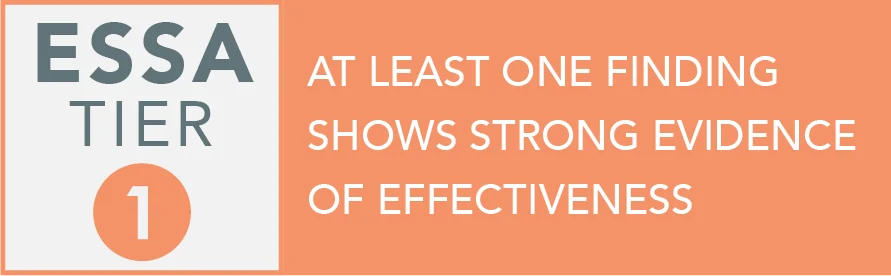
The US Department of Education's evidence guidance, revised 28 September 2023, sets out four evidence tiers under the Every Student Succeeds Act: strong evidence requires "at least one well-designed and well-implemented experimental study"; moderate evidence needs only "a...quasi-experimental study"; promising evidence needs "a...correlational study with statistical controls for selection bias"; and the lowest tier, evidence that "demonstrates a rationale," requires no completed study at all, only a stated theory and ongoing plans to examine it. The What Works Clearinghouse's ESSA page adds a quantitative floor for the top two tiers: a qualifying study needs a statistically significant positive effect, at least 350 students, and at least two education sites, and it separates studies rated "Without Reservations" (well-implemented randomised trials) from those rated "With Reservations" (quasi-experimental designs, or trials with implementation problems).
The implementation question
None of this tells a school whether a product will work for its own students; it tells a reader what kind of claim is being made. A vendor can accurately describe a tool as "backed by evidence" while resting on the lowest tier - a rationale, not a result. A district can ask plain questions of any such claim: what design did the study use; how many students and sites did it cover; was there a genuine comparison group; what outcome was measured; and who funded the work. The Education Endowment Foundation's evidence and practice reviews exist because these questions are hard to answer product by product: EEF commissions reviews to "investigate specific areas of interest in depth" as a function separate from funding and independently evaluating new trials, a split a vendor's own marketing rarely makes visible.
What holds and what fails
What holds: a tiered evidence system gives comparable, checkable language, and a study meeting WWC standards "Without Reservations" is doing more than offering a testimonial. What fails: treating any single tier as a verdict on effectiveness for a particular school, since the site and sample thresholds show how much even a "strong evidence" study leaves unmeasured - a different age group, subject or setting is not covered by someone else's 350 students. This is an editorial checklist, not a rating: it names what to ask a vendor, not a verdict on any product.
- What tier does this specific claim sit at, and does the cited study meet it or only gesture toward it?
- Who funded and ran the study, and do its comparison group and sample resemble our own students?
- Is the "evidence" a completed study, or a stated rationale still awaiting evaluation?
A checklist cannot settle whether a tool will work in a given classroom. It can settle whether the claim on the sales sheet is the claim the cited study actually supports.
Sources & reading trail
Defines the four ESEA/ESSA evidence tiers (strong, moderate, promising, demonstrates a rationale) and their study-design requirements; shown as revised 28 September 2023 at retrieval.
Source published: Not established · Retrieved: 16 September 2026
Sets the sample-size (350 students), site (two sites) and significance thresholds for strong/moderate ESSA evidence, and defines Without/With Reservations ratings.
Source published: Not established · Retrieved: 16 September 2026
Describes EEF's evidence-review function as separate from funding and independently evaluating new trials.
Source published: Not established · Retrieved: 16 September 2026
Departments, studies and vendor documents establish the record; the implementation reading and the boundary are School AI Atlas editorial analysis. This retrospective draft does not imply the site published on the event date.